Sunday, March 15, 2009

Hunter's Oath by Michelle West

This is the first book that I picked up specifically for this challenge. The goal of the challenge is to read at least two books by authors who share my name, or with my name in the title. They can share first or last name, so I went with last name, at least for the first two. If I find that I'm reading any books throughout the year that also share my first name, I'll go ahead and go above my goal.
Hunter's Oath is the first book in a two-book series by Michelle West. I actually picked this book up and read it several years ago, and then I never managed to find the sequel. At some point, I sort of forgot about the book, but I would see it occasionally at the library and want to pick it up again. I am so glad I finally did. I honestly do not remember liking it this much the first time I read it, but I loved it this time around.
The Hunter Lords of Breodanir have sworn a pact with their god. The Hunter God gives his people plentiful food in both the hunt and their farms, but once a year all of the Hunter Lords and their huntbrothers must participate in the Sacred Hunt, where they become the hunted, and one of them will suffer the Hunter's Death. Not too long ago, the King refused to call the Sacred Hunt, and his people were sorely punished for it. When the Prince finally killed the King and became King himself, that year the Sacred Hunt claimed many more than its usual one life. The Hunter God showed his anger, but he also gave back to his people, bringing them out of the famine the old king had left them in. The Hunter Lords know their burden, but they are also given special gifts by the god - they have the ability to communicate with their hunting dogs, to enter the hunter's trance and become more than simply human. Each Hunter Lord must have a huntbrother, someone chosen from the common people at the age of eight - the huntbrothers keep the Lords grounded, and they share a bond that is stronger than any other. The Queen and the Hunter Ladies are the ones that truly run the kingdom, while the King (Master of the Hunt) and his Hunter Lords provide for them.
Stephen was a thief in the King's City until he was chosen by Lord Elseth to become huntbrother to Gilliam, Lord Elseth's son. But Stephen has been marked by the gods for much more. The story continues to get complicated as we learn of the world outside of Breodanir, and of the Darkness that rises. Somehow the Hunter God, and Stephen and Gilliam, are involved in the coming battle, where all of their oaths will be put to the test.
I loved this book, and I am tremendously excited to read the next one, Hunter's Death. The world that West has created is different from many other fantasy worlds, and she does an excellent job of sharing that world with her readers. The characters are also very well written. Even though you want to hit them for making stupid mistakes sometimes, you still love them all the way. This book is highly recommended for anyone who loves fantasy and is looking for an interesting read.
Another fun challenge that I read this book for is the What's In A Name Challenge. This one includes six categories to read from, all relating to words in the title. I've already read books for the building and body parts categories. This one is for the "profession" category. I feel like I'm bending each one just a tiny bit, but I think it's okay. It certainly makes the challenge more interesting.

Saturday, March 14, 2009

Medieval Challenge Wrap-Up

At last, I have finished this challenge. The official end date was February 8, 2009. I think that I had only read three of my books by then. Which I think qualified for a lower level of the challenge, but not the six books I had signed up to read. The goal of the challenge was to read books related to the Medieval time period. These could be historical fiction set in that time period, non-fiction about the time, or books actually written in the middle ages. I chose to do two books from each category.
For the historical fiction books I read:
For the non-fiction I read:
And the texts actually written during medieval times:
Participating in a challenge that covers a specific time period is a great way to learn more about the time. Reading from the non-fiction and the fiction, as well as reading books written during that time really gave me some new ideas, and a greater understanding of the medieval time period.

Friday, March 13, 2009

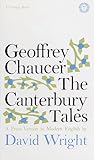
The Canterbury Tales by Geoffrey Chaucer

I have finished the books that I had set aside for this challenge! Yay! Sure, it's a month late, but I have enjoyed sticking with it. I'll have a challenge wrap-up post up soon.
For the Medieval Challenge, two of the books I read were texts that were written during the medieval period: Le Morte D'Arthur and The Canterbury Tales. I learned my lesson after the first one, and decided to go with a Modern English version for Chaucer. I chose David Wright's Modern English prose translation, written in 1964. I decided on a prose version because I really just wanted to know the stories, and if I'm reading a translation anyway, I might as well read it in prose form. As Wright points out in his introduction, it can be difficult to translate poetry while trying to maintain the poem, creating difficulties for the reader. One thing I found interesting was that for two of the tales, Wright simply gives the reader the gist of it, and does not bother including them in the book. He seems to feel that, even translated, these pieces are unnecessarily long-winded and unwieldy, and we would be better off without them. These are "The Tale of Melibeus" and "The Parson's Tale".
I was so surprised by the vulgarity, sex, and humor that were present in these tales. It was fascinating how the tales swung back and forth between morality stories about the saints and stories about wayward wives and their sexual exploits. I found some of the stories very very funny, which was another surprise. It's fantastic that even though this was written over 600 years ago, we still can find so many points of commonality. Of course, our views of women have changed (for the most part), and the overall culture's views towards God and the Church are different, but these details only make the tales more intriguing. I think it is truly incredible that we have this opportunity to read stories that give us a glimpse of what life was like centuries ago. And it is so much fun to read. Really, this is a very highly recommended translation for anyone who is considering reading The Canterbury Tales.
Reading classics is so much fun, I'm doing it for multiple challenges! This book fits right in with the Really Old Classics Challenge and the Centuries Challenge. It is also my "C" book for the A-Z Reading Challenge.

Wednesday, March 11, 2009

Library Loot - March 11, 2009

Ugh . . . I can't even keep my stacks of books together anymore. But truthfully, and I know I say this a lot, I will not continue to get this many books in the weeks to come. I will catch up.
So here they are:
  • Bhagavad Gita (for the Really Old Classics Challenge)
  • The Prince by Niccolo Machiavelli (see above)
  • Notebooks by Leonardo Da Vinci (see above)
  • The Known World by Edward P Jones (for the 999 Challenge - its a Pulitzer Prize Winner)
  • Middlesex by Jeffrey Eugenides (see above)
  • Legacy of Ashes by Time Weiner (another award winner for my 999 Challenge)
  • The Worst Hard Time by Timothy Egan (see above)
  • Spin by Robert Charles Wilson (see above)
  • Rainbows End by Vernor Vinge (see above)
  • Octavian Nothing - The Pox Party by M T Anderson (see above)
  • The Good Thief by Hannah Tinti (I can't even remember why I had this one on hold - so sad)
  • City of Thieves by David Benioff (another one I'm not sure about, but I have it now!)
And this week I took back Graceling and The Given Day without getting to read them. So they're back on the to-read list.
If you would like to see what others are getting or participate, head over here.

Saturday, March 7, 2009

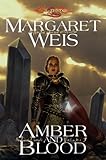
Amber and Blood by Margaret Weis

Amber and Blood is the third book in the post-War of the Souls trilogy in the Dragonlance series of books. This trilogy is called Dark Disciple, and it focuses on Mina, a character that was introduced in the War of the Souls trilogy. For those who know nothing about Dragonlance lore, this review is not going to make a whole lot of sense, and I feel compelled to tell you that there are series spoilers in this review.
In the last book in the trilogy we discovered that Mina was actually a god - all this time she thought the gods were working through her, but it was really her power that was working. She was created at the beginning of time as a god of Light, but as her existence upset the balance between Darkness and Light, she was put into eternal slumber. She awoke when Takhisis stole the world, which precipitated the War of the Souls. Takhisis convinced Mina to work for Darkness, and Mina never discovered that she was meant to be a goddess on the side of Light. It's no wonder that at the beginning of Amber and Blood, she goes crazy and appears as the aspect of a six-year-old child, before she became a vehicle of Takhisis' will. Amber and Blood follows Mina's journey to Godshome, where she is drawn for some inexplicable purpose. She is joined by Brother Rhys, a monk, and Nightshade, a kender (with common sense), and their dog Atta. The choices she makes could upset the balance of power in the universe, but no one seems to no what she might do.
I really only finished this book because I wanted to see how Weis would end the trilogy. The book itself was definitely not great. I enjoyed it for the Dragonlance storyline, but even that really wasn't enough to make me care about what happened. It's disappointing, because I know that Weis can do better, at least I have read better books by her and Tracy Hickman together (The Deathgate Cycle is a must read for anyone who enjoys fantasy). But the latest Dragonlance books, especially this series, have really been a let-down.
This book qualifies for a few challenges I am participating in. For the What's in a Name Challenge, it serves as the "body part" category. For the Read Your Name Challenge, it is my "A" book (now I just need J-E-S-S-I). And it is also my "W" book for the A-Z Reading Challenge - I'm reading authors a to z.

Wednesday, March 4, 2009

Library Loot - March 4, 2009

I did not have any library loot last week, as I was out of town, but this week I once again make up for it by adding more books to my list than I can manage to read in a week.
  • The Aeneid by Virgil (Another one that will eventually get read for the Really Old Classics Challenge)
  • Metamorphoses by Ovid (see above)
  • Jellicoe Road by Melina Marchetta (I have read so much about this book, I am looking forward to reading it)
  • The Story of Edgar Sawtelle by David Wroblewski (on a Best of 2008 list, and still one of the most popular books at my library - I'm predicting now that I will not get it read before it's due back)
  • Coraline by Neil Gaiman (I already saw the movie, and I loved it, so now I finally have the book to compare it to)
  • Warriors: Tigerstar & Sasha #1 by Dan Jolley & Don Hudson, created by Erin Hunter (this is a manga that covers some of the back story of a few characters in the Warriors series - should be entertaining)
So there we are - as a note, it is obvious that I do not read quite this many books every week. Maybe I should start keeping track of the books that get returned when I can't even start them before they're due back. In that vein, this last week I returned Anathem by Neal Stephenson and Unaccustomed Earth by Jhumpa Lahiri. They have both since been added to my to-read list, rather than my physical to-read stack.

Tuesday, March 3, 2009

Suddenly Supernatural: Scaredy Kat by Elizabeth Cody Kimmel

Scaredy Kat is the second book in the Suddenly Supernatural series; the first book was School Spirit. I didn't read School Spirit, but I still enjoyed Scaredy Kat. I did not feel like I was behind on the story at all.
Scaredy Kat takes place over Kat's spring break from school. She has recently turned thirteen, and with her thirteenth birthday she came in to her supernatural ability to see and communicate with spirits. When this book opens Kat has already had some experience dealing with ghosts. Now she's by herself on spring break, her best friend Jac off at a music conference, and she becomes interested in the abandoned house next door. She takes a few pictures of it, but when she loads them on to her computer, she sees something that wasn't there before: a boy looking out from one of the windows. When Kat decides to investigate, she realizes that sometimes spirits can be really scary.
I really enjoyed reading this book, and it seems like it will be a fun series. Kimmel does a great job of creating suspense for the reader. This is one of those books where almost every chapter ends in a way that makes it almost impossible to stop reading. And it is set up nicely for the next ghostly encounter in the next book. I liked the fact that even while Kat was dealing with the spirit world, she and her best friend were also dealing with being thirteen. They both had to make decisions about being their own person and relying on themselves rather than on their parents. The only difficulty I had with the book was that I felt it went into more detail about some of the supernatural stuff than was entirely necessary. Younger kids might have a hard time understanding all of the spirit world speak, like "energy work" and auras. But it's hard to say whether or not the story could be told without that. So it's a minor complaint.
This was a fun read, and would be enjoyed by older kids and middle schoolers.

Sunday, March 1, 2009

The 1% Well-Read Challenge

I had read about this challenge on other blogs, and thought it sounded interesting, so I'm excited to join for 2009. The challenge begins today, and ends March 31, 2010. There are three different levels you can do it at, the first two have the challenge ending on December 31st, 2009. I will be reading 13 titles from both the original and updated lists. This is the combined list that I used to choose my books from.
For more information, head to the challenge page here.
This is my list, in no particular order (except that Ficciones is at the top, because that's the next book on my to-read pile!). There are more than 13 here, so in case I give up on one, I have another to choose from. I certainly won't be reading them in this order, so I have not bothered to number them.
  • Ficciones by Jorge Luis Borges
  • The Inheritance of Loss by Kiran Desai
  • The Sea by John Banville
  • 2666 by Roberto Bolano
  • Vernon God Little by DBC Pierre
  • Atonement by Ian McEwan
  • The Amazing Adventures of Cavalier and Klay by Michael Chabon
  • The Hours by Michael Cunningham
  • In Cold Blood by Truman Capote
  • One Hundred Years of Solitude by Gabriel Garcia Marquez
  • Things Fall Apart by Chinua Achebe
  • Middlesex by Jeffrey Eugenides
  • American Pastoral by Phillip Roth
  • Mrs. Dalloway by Virgina Woolf
  • Metamorphoses by Ovid
  • Aesop's Fables by Aesopus
Reading this list was fun, as I realized that I've read dozens of the books on there already. I like to think I'm well-read, but it's nice to have it confirmed from time to time. And it's always good to have a place to go to find classics.

Saturday, February 28, 2009

The Pillars of the Earth by Ken Follett

Here is another book for the Medieval Challenge that I was unable to complete before the challenge ended. Only one book to go! I chose this book because it is historical fiction that takes place during the Medieval period - the twelfth century to be exact. The final book I am reading is another Medieval text - The Canterbury Tales, by Chaucer, in a Modern English prose format.
The Pillars of the Earth is a rather difficult book to describe for a review, but I will do my best here. It begins in 1123, with a description of a hanging, where the lover of the man being hanged puts a curse on the three men who have sentenced him. From there it jumps to 1135, where we begin to learn the story of Tom Builder, an out-of-work mason who's greatest dream is to build a cathedral. After this point it is a little bit difficult to give any kind of coherent synopsis without just telling you the story of the entire book. We meet Prior Phillip, a monk with a big heart who constantly underestimates the cruelty and maliciousness of others; Ellen, the mother of Jack, who is the girl who cursed the three men in the prologue, who now lives with her eleven-year-old son in the forest; William Hamleigh, the son of a power-hungry mother and father, with a mean streak in him that makes him the obvious villain; and Aliena, daughter of the Earl of Shiring, who follows her own heart, even when it ends up costing her family everything. These are the characters that the novel follows over thirty years, as they are all tied into the fate of the building of the Kingsbridge Cathedral.
This book is an incredibly in-depth and well researched story of this time period, known as The Anarchy, a time of civil war in England between Empress Maud and King Stephen, after the first King Henry dies without leaving an heir. The town of Kingsbridge is not a real place in England, but modeled after an amalgam of many such towns of the middle ages (I think there is actually a Kingsbridge in England, but this is not supposed to be the same place). The characters are all very well drawn, although Follett's efforts to make us hate William are a little bit over the top (how many women does a man need to rape before we get the idea that he's the bad guy?). And all throughout the book Follett does an excellent job of really making us care about the characters, through the tradgedies and disappointments, as well as through the good times. The other issue I had is minor, but it seems that Follett does not trust his readers to remember what happened 100 pages ago, so he reiterates the story for you to the point where you want to say, "Yes I am reading this book, I know about that." But maybe for some readers, that is helpful. Either way, I highly recommend this book to anyone who enjoys family sagas or historical fiction, or anyone who just enjoys a good story.
In addition to the Medieval Challenge, this book is another one I am using for both the A to Z Reading Challenge and the New Author Challenge. I am also using it for the What's in a Name Challenge. That is a fun one where you read books with a specific theme in the title. This title is for category number five - a book with a "building" in the title ("pillars" are part of a building, right?).

Friday, February 27, 2009

Compass Points Challenge

Of course I would hear about the Compass Challenge only a few days after I finish a book that would have been perfect for it! Oh well.
The idea is to read four books, each one with either north, south, east, or west in the title. The challenge runs from March 1st to August 31st.
I haven't picked out any titles for this one. I don't even think that there are any books on my to-read list that qualify, but I'll find something.
If you'd like to join, just click the button and head on over to the blog!