Showing posts with label General Fiction. Show all posts

Friday, November 13, 2009

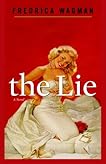
The Lie by Fredrica Wagman

This book was totally not what I expected it to be. Honestly, I really had no expectations, it's been in my to-read pile forever and I finally just got to it. But even with no expectations, it completely surprised me. This review may contain spoilers, it is incredibly difficult to talk about without giving away plot. But I think it will be okay, if you plan on reading the book - I don't think anything I discuss will ruin the story in any way.
Ramona Smollens is seventeen when she meets the man she will marry, just one month after meeting him. Their meeting is very strange, and sets the tone for the rest of their relationship. The entire novel takes place inside Ramona's head, with her as a narrator. And what an unreliable narrator she is! The "Lie" of the title is complicated - Ramona's entire life seems to be a lie, as she has lied to herself and others for so long. But really, the Lie for Ramona seems to be that love and sex and marriage can bring happiness and fulfillment to life. Ramona has believed in the promise that she was told by the sirens of the silver screen, Rita Hayworth in particular, that she will be swept off her feet with passion, and sex will come easy to her, and she will be happy. But none of this happens. And so Ramona lies, to her parents, to her husband, to herself. And she lives within the lies that society has told her, and the lies she believes that her husband is telling her. And within her narration, it is sometimes impossible to tell the truth from the fiction.
The writing itself is not what I was used to. Wagman uses a sort of stream of consciousness style, with sentences that seems to go on forever, broken up by elipses and dashes. But it always makes sense, and the style never distracts from the story. It only adds to the sense of madness that we get from Ramona. She is entirely obsessed with Rita Hayworth, and entirely obsessed with the idea of herself as a woman. She grew up in a household that destroyed her soul, and made her seemingly incapable of real feeling. This book was really a fascinating read, and would be a terrific choice for a book club. There is so much here to discuss! I read it in a few hours, it just flies by. If this review has made the book sound interesting at all, I would definitely say go pick it up. You may not like the story, or Ramona, but you won't forget it, and you won't regret picking up this book for a glimpse into the way the Lies of our society can alter a life.

Wednesday, May 13, 2009

The Ten Year Nap by Meg Wolitzer

**An apology for not blogging for so long - I've been sick, and it's difficult to sit at the computer when you don't feel well! At least I managed to finished several books, so I have something to blog about!**
The Ten Year Nap follows several months in the lives of a handful of women. What these women have in common is the fact that they are mothers. For the few that are central to the story, they are mothers that quit their jobs when they had children, and have not gone back to work even though it has been ten years. They each contemplate going back to work, for various reasons, but so far they never have. For Amy, the reasons are not fully formed - she's thought about it, but deep down she's afraid that she won't be able to keep up with the changes that have happened in the legal field since she left. Her mother is a strong feminist who worked as a novelist while raising her children, and she is constantly pushing Amy to go back to work. For the other central characters, life is just as complicated, and offers no easy answers about whether or not you can be a good mother and have a career.
This was a very interesting read, and meaningful to me, as I plan on quitting my job once I am pregnant - and I do not plan on going back once my child is born. Most women have an opinion on this subject, but that sometimes changes once they have children of their own. For the women of this book, many of them thought they would go back to work, and then just never did. There are some characters that act as foils for these women - mothers who work, whose children go to school with theirs. They work because they love their jobs, their career is important to them. But what kind of mothers are they? Are Amy and Jill better mothers because they do not work? The book does not answer this question, leaving it up to the reader to ponder.
One of the things that I really liked about the way this book was written is the way it went from character to character, telling us details about these women's lives. Then there would be a chapter about the mother of the woman of the preceding chapter, giving us a glimpse into her world. It made the characterization very deep and interesting. This book is an excellent look at the modern family woman, and was a very intriguing read.

Monday, April 27, 2009

The Brief Wondrous Life of Oscar Wao by Junot Diaz

The Brief Wondrous Life of Oscar Wao won the Pulitzer Prize for Fiction in 2008, which is why it was in my pile of books to read. I also went to a book club discussion about it.
The book is really difficult for me to describe. It is basically the story of Oscar, a hugely obese "Dominican ghetto-nerd" who is a character you love to root for, but at the same time he is incredibly pathetic and hopeless (and thus frustrating!). Oscar's family is from the Dominican Republic, although he and his sister Lola mostly grow up in New Jersey. Their mother's family did not survive the Trujillo dictatorship, and she herself fled to the United States as a teenager. Most of the story, including the history of the family, is told by Yunior, a sometime-boyfriend of Lola's who tries to help Oscar out of his depression in college. Two of the sections are told by Lola, but she only speaks of her own view of the situation, and she seems to be writing to Yunior, though it is difficult to tell.
What I liked best about this book was the writing - it was so much fun to read, even if it was hard to follow at times. Yunior throws in a ton of Spanish, as well as a tremendous amount of nerd-slang that I found really amusing. Most of it you can figure out from context, because it is certainly not explained for you at all. Yunior's voice is entrancing, in a way that I would not have expected.
As one of the 12 Mini-Challenges that I am doing this year, I went to a book discussion (#10). It was really interesting to discuss this particular book, because it is difficult, and sometimes inaccesible. There were seven of us at the meeting, I think three of whom had not finished the book. We brought up some topics that we thought were interesting, though we did not delve very deeply into any of them. It was more of a sharing of our thoughts, rather than really digging into the book. One thing that we didn't talk about much was the mysticism in the book, the presence of the golden Mongoose and the Man Without a Face. But it was otherwise a good book chat. I also read the book for my 999 Challenge, for which I am reading all prize winners (my list for this one is here). And, not to leave out anything, I am also reading this for the New Author Challenge and the A-Z Challenge.

Friday, January 16, 2009

The News From Paraguay by Lily Tuck

This National Book Award Winner is historical fiction that takes place mostly in Paraguay, in the 1860's. The story mainly follows Ella Lynch, the young, beautiful Irish woman who comes home with the president's son after his trip to Europe. It is difficult to say whether or not Ella and Franco actually love each other, but they do stay together, though never marry, throughout the fifteen years that Ella is in Paraguay. During those fifteen years Ella gives birth to seven children, five of which live to be teenagers. Franco's father dies, giving him the opportunity to take control of the country and embroil it in a seemingly senseless war against the surrounding countries. Franco becomes a dictator, forcing his people to give up everything for his pointless war, becoming more and more paranoid, arresting and killing people for no reason. Ella continues to support him, more because she doesn't know what else to do, than because she actually believes in the cause. She considers leaving many times, but always stays, until the war has destroyed the entire country, killing almost all the men, including Franco himself.
I really enjoyed reading this book, although it wasn't necessarily due to the story. The book is written in a very interesting way - we are given brief glimpses of parts of the characters' lives, usually in short sections that are only a handful of paragraphs or less. This makes the story feel like it is moving very quickly. Tuck does not just focus on Ella and Franco, either, but gives us pictures of many of the other characters, major and minor, and leaves it up to the reader to make a whole story out of it. Her choices of what to show about each character are very deliberate - some of the characterizations seem rather shallow at first, but get deeper as we get more glimpses of them. This is one of those books that is more interesting to read for the way it is written, rather than for the story itself.
About the story - it is about real events, Ella and Franco did exist, as did many of the other characters in the book. I always find it fascinating to learn about history in this way, and also to learn about what came from history and what came from the mind of the author. In this case, events of the war are not particularly well documented, and many of the minor events were never documented. But the book is obviously well researched, and I think that Tuck does an excellent job of describing Paraguay during the 19th century. In the Author's Note she quotes a friend who says, "Nouns always trump adjectives, and in the phrase 'historical fiction' it is important to remember which of the two words is which."

Sunday, January 11, 2009

The Swallows of Kabul by Yasmina Khadra

The first thing that I noticed about this book was before I even began reading it. It was originally written in French, translated by John Cullen. And the woman's name Yasmina is actually a pseudonym for an Algerian army officer. He used the name Yasmina Khadra so that he would not have to submit his work to army censors while he was still in the army. Knowing who the author of a book is is not always important when you're reading a book, but I found this detail intriguing.
The Swallows of Kabul is a story about two couples in Kabul under the rule of the Taliban. The book begins with an execution, another death that has almost no effect on anyone, as death has become so normal. War is the normality, and the Taliban has taken such control over everyone's lives that Mohsen, one of the main characters, has to convince himself that it was not always this way. He remembers being able to laugh in public, entertaining guests with his family, being happy. But he has not experienced these things in so long, they seem like the swallows of the title - they have fled with the arrival of war.
This book is a quick read. The almost 200 pages fly by. Yet it is not easy to read. It is tragic, the way the main characters' lives are torn apart by the week or so the story covers. In a sense, this is a book that mourns for all of the things that were lost because of the wars Afghanistan has endured: beauty, freedom, the ability to love, Kabul itself. It is a eulogy.
I have owned this book for awhile, but of course it took the RYOB Challenge to get me to read it. This is another book that I am using for the A-Z Reading Challenge as well (it's my "K" book). It also qualifies for two challenges that I have not yet read anything for: The Well-Seasoned Reader Challenge and the Lost in Translation Challenge. For the Well-Seasoned Reader, I have chosen books that have the name of a place I have never been in the title. And of course Lost in Translation is rather self-explanatory.

Wednesday, January 7, 2009

Year of Wonders by Geraldine Brooks

To begin this review, I have to say that I am a big Geraldine Brooks fan, this being the only novel by her that I had not previously read. Unfortunately, this is not her best book.
Year of Wonders takes place in the 1600's, in a tiny mining village in England. The narrator is Anna, a young woman who has lived through the year, and helped to bury more than half the people in this town. Her lodger was the first person to die of the Plague, which takes her children and many others as well, eventually. In an effort to confine the disease, the town decides to cut itself off, allowing no one in or out, and receiving help from the neighboring towns only when that help can be left at a distance. Their efforts keep the disease from spreading any further, yet perhaps causes more deaths in their own village.
The heroic efforts of this small village come at a great cost. This book is definitely more violent than I had expected. Some of it is simply the violence of the time: witch trials, punishments for theft. But some of it seems unnecessary, although I understand that Brooks was trying to convey the madness that some of the villagers struggled with in their grief. The book is wonderfully well researched, which makes for a story that feels true. It is a fascinating read for anyone interested in the Plague, or in this time period, but it it not easy to read about what these people went through. Life was hard enough in the Medieval Period without the Plague.
This is my first review for the Medieval Challenge. I am really looking forward to the other books I'm reading for this challenge. Hopefully I can get it done by February 8th! This book also qualifies for the A-Z Challenge. As I am doing a to z authors, this book will stand for my "B" author.

Sunday, January 4, 2009

Life of Pi by Yann Martel

First book of the New Year! This is a wonderful book that I finished in three days. I was honestly not expecting it to affect me as much as it did, although when it was given to me, or course I knew that it had been very well received in general. I was a little bit put-off by the premise of it: sixteen-year-old Pi Patel is trapped in a lifeboat crossing the Pacific Ocean with a 450-pound Bengal tiger. But this book is about so much more than that.
The fact that the first third of the book has nothing to do with being stranded out in the middle of the Pacific Ocean with a Bengal tiger is something that I think needs to be mentioned. Everything I've read about this book gives you the idea that that is the only important part of the plot. But the whole first part of Life of Pi is about Pi's life and family before the accident that strands him on the lifeboat. Pi's full name is Piscine Molitor Patel, Piscine Molitor being the name of a pool in Paris. Pi's family has never been to Paris. The fact of Pi's full name is just one of the ways that Martel does an incredible job characterizing Pi and his family. Pi himself chooses his nickname, in full awareness of the fact that it is a Greek letter that is used in mathematics. With this nickname he takes control over his life by taking control of the use of his name. Pi's father runs the zoo in their formerly French town, Pondicherry, in India. It is the 1970's, and Pi's father is increasingly concerned with the way his country is going. So he decides to pack up and move his family to Canada. Along with his family, he has made arrangements for the sale of most of the animals in the zoo, who will be coming along on the trip with them, at least as they cross the ocean.
I really can't say enough about what a wonderful story this is. Martel is an amazing storyteller, one who can make the simplest details profound, and who can make you feel like you are a part of his story. When reading this book, it is important to pay attention to how he is telling the story, as well as what he is saying. The chapter breakdown alone is something that leads you to think more about what it means to tell a story. This truly is a beautiful book that I expect is only more enjoyable the more times you read it.
This is the fourth book I've read for the From the Stacks Challenge. I got it as a gift at least two Christmases ago. So far this is my favorite read from this challenge. I am also using it for the RYOB (read-your-own-books) challenge, which is obviously very similar. I need help when it comes to reading the books that are on my shelves, as opposed to library books, so these challenges are excellent for me.
This book also qualifies for two other challenges that I signed up for. One of those is the A-Z Challenge, where I signed up to read books by authors a to z. So this is my "M" book.
The final challenge that I read this book for is the only challenge that I picked books out for ahead of time. Generally I dislike making specific booklists for challenges, but in this case, I decided to do it. The challenge is the 999 Challenge, a Librarything group challenge. The idea is to pick nine categories, and then read nine books in each category. I picked prizewinners as my categories. So one category is the Man Booker Prize, which Life of Pi won in 2002.
Here's hoping that more of my books will fulfill so many challenges.

Friday, January 2, 2009

The Exchange by Inga C Ellzey

"The right murder. The wrong person. The perfect love story." So proclaims the cover of this novel, written by someone who mainly seems to have written it simply so that she can say she did. This book suffers so much from the fact the Ellzey does not seem to particularly care about producing something readable. Her author bio states that it was her dream to write a novel, and now she has. Congratulations to her for achieving her dream.
There are many reasons why this book was difficult to read: ridiculous expository dialogue, bad sex scenes, a predictable, yet not very believable plot. Jewelle is a complete work of fantasy. She is in the Witness Protection Program, which has taken her away from the oh-so-glamorous world of the medical billing industry. To try to recapture some of that excitement that her life has lost, she goes on a cruise. Immediately, every character that she meets becomes her best friend, if female, or new sexy love interest, if male. Within days she is closer to these people than she has ever been to anyone, and they all love each other dearly. So when Jewelle's identity is discovered, and she is once again in danger from the Mob, these friends will sacrifice everything to save her. I didn't even like Jewelle that much, but I suppose that wasn't the point.
It is clear that this book did not get any help from writing workshops or editors. And if it did, they were not doing a very good job. When something is described as being from a picture out of an "I-Maxx" movie, you know that both the author and the editor are not trying very hard.

Thursday, December 18, 2008

Under the Net by Iris Murdoch

Here is my third entry for the From the Stacks Challenge. (Previous entries can be found with the label below.) This is one that I've had for about a year - it was a Christmas gift from my brother-in-law and his girlfriend last year, and it took signing up for a challenge to get me to read it. Not because I wasn't interested, it's just very difficult to get me to read my own books. That's specifically why I sign up for these sorts of challenges.
I knew nothing about this book, beyond the information anyone can glean from the cover print. The book was written in 1954 by Iris Murdoch, who wrote more than 20 books. This one takes place in London, presumably during the time that it was written. I found Under the Net to be more entertaining than I expected. The main character, Jake Donaghue, is a man who is afraid of hard work, who never has a job or a place to live, but manages to live well off the generosity of this friends. The only job he seems to do is as a translator for a french author. Jake wants to be a writer in his own right, but as mentioned before, he's not very good at actually working on something.
Jake's life changes when he is once again without a place to live, and gets in contact with his old girlfriend and her movie-star sister. This brings him back into contact with Hugo, the man who he broke off contact with years before. Jake has to come to terms with a variety of opinions he holds about these friends from his past before he can face his future.
I really enjoyed reading this book. It is hard to explain how funny the book is - there are parts that seem like some kind of movie caper or heist. Jake's character is very well drawn - you root for him even when he's behaving like an idiot. His friends are interesting and varied, and not like anyone I know. And once Mister Mars, the movie dog, joins him (in a very funny kidnap-the-dog scene), I was loving it. Written by someone less talented, this book could have been terrible, but Murdoch does a wonderful job telling the story with both humor and drama.

Monday, December 8, 2008

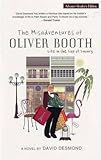
The Misadventures of Oliver Booth by David Desmond

Oliver Booth is one of those people that you either despise or feel sorry for, sometimes at the same time. His character has absolutely no redeeming qualities, and the author is quick to let you know that no one else on the planet seems to like him very much either. In fact, Desmond works so hard to make us dislike Oliver that it is really difficult to read about him, or care what happens to him, unless you enjoy reading about people who are constantly embarrassed and miserable.
Oliver Booth is an "antiques" dealer in Palm Beach, Florida, where he runs a shop full of replicas that nobody ever sees, because he gets hardly any business. When he is lucky enough to acquire a sales clerk who is intelligent, friendly, and French, his luck begins to turn around. He is noticed by one of the wealthiest women in town, and he and Bernard are sent to Paris to choose antiques to decorate her guest house. Mrs. Van Buren sends them because of Bernard, not because of Oliver, and she seems to think that it is her place to see that Oliver is continually humiliated. "People like Oliver" need to be taught a lesson. A lesson in what? How to not try to be something you are not? In Oliver's case he is constantly pretending he is part of the upper-class society of Palm Beach, which he can never join due to his lack of money and good looks.
This whole book was an inside joke about the society of Palm Beach - it could be called satire, but it was so full of stereotypes and cliches that it lacked the bite that most satires have. I generally don't enjoy watching as people make fools of themselves, so I really did not enjoy watching Oliver bumble through life, but I understand that I am in the minority there. I suppose that I just do not find the foibles of the really-rich to be all that funny, and the bad and cliched dialogue and superficial, stereotypical characters certainly added nothing to the story. Overall, if more books are written about Oliver and his hi-jinks (which it seems is the case), I will not be reading them.

Saturday, December 6, 2008

The Death of Ivan Ilych by Leo Tolstoy and Martel-Harper Challenge Wrap-up

This is the second, and final, book I read for the Martel-Harper Challenge, hosted by Dewey at The Hidden Side of a Leaf blog. (The first book was To Kill A Mockingbird, and my blog post about it is here.) I am very sad to say that as of very recently, Dewey is no longer with us, but I wanted to finish this challenge because it is such a terrific idea.
The challenge is based on the books that author Yann Martel sends to the Prime Minister of Canada, Stephen Harper, with recommendations of why he should read them. The Death of Ivan Ilych is the first on this list of books, and here is the letter that accompanied it. (This is the only letter that seems to have gotten a response, even if it is only a couple of sentences.)
This was a fascinating short story (at 60 pages, maybe it could be called a novella?). I found it at first entertaining, in its satirical depiction of upper-middle class Russia in the late 1800's. The story opens with Ivan Ilych's funeral, where his acquaintances have come to pay their respects. He cannot be said to have any friends, even his own family does not seem to feel true sorrow or grief at his death. It is a farce, where everyone must pretend to feel something they do not. The story then goes back to tell the tale of Ilych's very typical, mundane life. He does everything that is expected of him, moves through life in exactly the way he should. The way that Tolstoy pokes fun at this lifestyle is very entertaining, even when Ilych first realizes that he is ill. As the story proceeds to be about his slow and painful death, it becomes less satire, and more of a look at what it means to live, and therefore what it means to die.
In his letter to the Prime Minister, Martel points out that anyone, anywhere in the world can read this story and relate to it, regardless of the fact that none of us are living in tsarist Russia. All of us understand the fear of death, and the fear that our lives our meaningless, that we made a mistake somewhere in our lives, didn't live them the way that we should have. Tolstoy is an expert as showing us the truths of life, and that in the end, we are all the same.

Friday, December 5, 2008

Half of A Yellow Sun by Chimamanda Ngozi Adichie

This was a beautiful, tremendously sad book to read. Sad because while the characters are all so hopeful, the reader knows how the story historically ends. This is a story of the Nigerian Civil War, or the Nigerian-Biafran War, a war that took place in the late 1960's. Biafra seceded from Nigeria in 1967, a fact that causes much joy among the characters of Half of a Yellow Sun. However, most people who read this book will know that the war caused tremendous suffering, in terms of the violence, starvation, and sickness that it caused, and Biafra does not win the war. But even in the worst of times, the Biafrans believe they will be vindicated.
The story is told from three different points of view - Ugwu, Olanna, and Richard being the focus of the third person perspectives. Ugwu is the house boy of Odenigbo, a radical professor who believes in secession and thinks that Europe should leave the Africans to govern themselves. He sends Ugwu back to school, even though he is older than all the other children, and encourages him to read as much as he can - he is never treated as just a servant. Olanna is Odenigbo's lover. She is from a relatively wealthy family, was schooled in London, and has joined Odenigbo at the university where he teaches. Richard is a British man who is in Nigeria because he is fascinated by tribal art. He is the lover of Kainene, who is Olanna's twin. He also participates in the life of the university, and so becomes part of the group that spends time at Odenigbo's house, when he is not staying with Kainene. These three characters, while their stories intertwine and overlap in time, each tell a different part of the story. Ugwu and Olanna are in the same house, yet their stories are very different, as they have separate responsibilities, friends, and circles of acquaintances. As the war begins, this story structure works very well for describing the events and experiences of the Biafrans of all different walks of life.
This is definitely one of those books that stays with you after you put it down. Even while I was reading it, I was haunted by that image of a rising sun. It brings so much hope to those fighting for their independence, yet the reader knows that in the end, Biafra does not succeed. The imagery created by that half of a yellow sun, which appears everywhere, is hauntingly beautiful. The choices that Adichie makes with her characters also strengthen the story. I had wondered to myself why central characters like Odenigbo and Kainene weren't also used to tell the story from their perspective, but I think that their voices would not have had the same expression as the three main characters. Odenigbo is too confident, unwilling to show any weakness, while Kainene is too jaded and bitter, with her hope buried deep. It is interesting to imagine how the story would be different from their points of view. This would be an amazing choice for a book club - already I find myself unable to stop talking about it once I get started. So I think I will stop now, with this recommendation - read this book.

Sunday, November 23, 2008

In the Country of Men by Hisham Matar

In the Country of Men takes place in Libya, in the 1970's. This is a time and place that I know very little about, but the scope of this novel is not very wide, and the narrator gives a full picture of his world. The narrator is nine-year-old Suleiman, describing the summer when his father's rejection of ruling government brings his family much pain. Suleiman understands very little of what is going on, and so as a reader who does not know very much about this time period, I also did not understand much. Matar does an excellent job of keeping the story within what a nine-year-old would be able to grasp, yet allowing for enough hints to give the reader a better understanding.
The hardest part about reading this book was watching Suleiman's moral deterioration. He is incapable of acting in the adult ways that his parents expect, and he begins to strike out at his friends and family as a way to try to regain control of his environment. He knows that the way he is behaving is wrong, but he just wants attention, and possibly appreciation from anyone, even if that means betraying his family and himself. The rest of his life is colored by this one summer, but it seems that in the end, his own actions have little effect on his life. It is the bigger changes, the trouble his father brings on them and what his mother does as a result of it, that truly alter the course of his life.
It would be interesting to pair this book with one or two non-fiction titles about the political situation in Libya at this point in time. As with many books that I read, I feel like I miss something when I don't know the whole background that the author is writing from. This book is an interesting read even without that understanding, however, it makes me realize how little I really know.

Friday, November 21, 2008

The Handmaid's Tale by Margaret Atwood

Amazing that this book should be my 100th book review of the year. This is probably my all-time favorite book, and after re-reading for the third time, I am reminded why. It is amazing what you get out of a book that is different each time you read it. I think that is a measure of how good a book really is, sometimes.
The Handmaid's Tale is similar to many of the other books that I have read recently, the dystopias that I love so much. This is by far the best. The world that Atwood creates is much more similar to our own than that of 1984 or Brave New World. Although 1984 takes place not long after the upheaval that creates its world, The Handmaid's Tale takes place in a world that is so similar to our own. The main character remembers so much from "the time before" that is recognizable.
The way that women are controlled in this new society is frightening, and it's always the worst when we learn that many women support what the new society is doing. They feel safer with the new order, although how anyone can ever feel safe when everyone is under heavy government surveillance, I will never understand. Everyone must constantly watch their step, make sure to not attract undue notice. The narrator of the story does her best to go along with it, stay out of trouble, but as a handmaid, she has one of the most despised, but also powerful, positions in society. She also remembers too much about "the time before" and that makes it difficult for her. She imagines what it will be like when future handmaids have never known any other kind of life - they will cease to question it.
There are so many fantastic levels to this book, but after reading it this time around, what stood out to me the most was the descriptions of "the time before". When I first read this book, I think that I imagined it to be more similar to our own time than it actually is. As the narrator remembers her life before the current regime, she remembers details that seem like our world, but are slightly off. She describes a time when a woman tried to run off with her daughter, right in the middle of a grocery store - she thought it was a random occurance, but apparantly it was not uncommon. It was becoming clear that women were having more and more trouble having children, and those who were able to get pregnant were the truly lucky ones. Another factor is that of the Compubank. It is similar to our ATM card system, but paper money has been abolished. The narrator believes this is what gave the new government so much power. They were able to freeze the accounts of all women, not allow them access to any sort of money. It's a chilling thought. These are just a few details in a book that is rich with them.
This is a wonderful book, even if you are not a fan of alternate futures, or dystopias. If you've never read it, read it. If you have, you will always get something new from reading it again.

Monday, November 17, 2008

1984 by George Orwell

This is one of those books that I have read at least three times, this most recent time being the third, I think. This image is actually the edition of the book that I own. It's so different from some of the others, especially the more modern editions. This is the 1984 edition, which is meaningless, because the book was not a prediction for where we would be in 1984. I just find it interesting.
This is absolutely one of my favorite books ever. It's funny how you can read a book like this and remember things that seem so important to the story, you wonder how you forgot them. Even though I've read this book twice before, I still kept having, "Oh yeah!" moments. The story of Winston Smith and his comrades of the Party, of Oceania and Big Brother, is so compelling, so intricate, it should be read by everyone.
One thing that I wanted to discuss about this book was the fact that in the various prefaces, forwards, afterwords, etc in the different editions they always talk about how Orwell did not mean for the book to be a prediction or prophecy, but a warning. But I think that even more than a warning against the future, he meant it as a warning to open our eyes to the present. So many of the aspects of the control that the Party has over the people of Oceania are things that we experience now. Doublethink is alive and well, but that is only important if you acknowledge it for what it is, and don't let it fool you. Orwell could not have known about the war on terror, but that is exactly the kind of war that the Party wages against its "enemies" Eurasia and Eastasia. An unending war, whose purpose is to create an economy (supplies and weapons), give the people an enemy to hate, and give the government permission to take away freedoms. There are so many other details that you will notice as you read this book - it really is a matter of reading to open your mind. If you've read 1984 before, read it again; and if you've never picked it up, now is a good time.

Thursday, November 13, 2008

To Kill A Mockingbird by Harper Lee

This is a fantastic book, which I love. It is one of those classics that I actually did read (and I even remember it!) in high school. The story of the Finch family and their small Alabama town of Maycomb is one that everyone can relate to in one way or another. Lee does a beautiful job of telling the story of the family and the town without directly telling you. The descriptions and anecdotes of the book are my favorite part. It's like getting a glimpse of someone's life without them telling you every detail, just by observing. Lee makes us feel like we've observed and absorbed this small town story.
I wanted to take this opportunity to address all of the challenges that I have signed up for. This is the first book that I have completed for one of those challenges. Challenges are hosted by various bloggers, and are a fun way to get ideas for reading, as well as a way to discuss lots of interesting books with lots of interesting people. Most of the challenges I'm participating in don't actually start until January, but a few have already begun. This book qualifies for the Martel-Harper challenge.
The Martel-Harper challenge refers to a unique relationship between a writer and a politician. The relationship is actually almost 100% one-sided, but it is a relationship nonetheless. Yann Martel is the author, Canadian Prime Minister Stephen Harper is the politician. For months now, Martel has been sending Harper two books a month, enclosing a letter with each one to explain why he feels Harper should read it (read more about it here). The challenge is simply to choose two of those books each quarter to read. Here is the letter that Martel included with To Kill A Mockingbird.

Tuesday, October 28, 2008

The Color Purple by Alice Walker

This is another one of those classics that I never managed to read. I've never seen the movie either, so I wasn't really sure what to expect. It took me awhile to get into the story; it moved very slowly at first, and I had a hard time enjoying it. Celie's life is just terrible, but because she doesn't know anything else, she deals with it the best she can. For the first half of the book, all we read are her letters to God, in which she describes the sadness and violence of her life. It was really depressing.
The story really gets going once she begins to stand up to her husband, with the help of his former (and sometimes current) lover Shug. Then she reads the first letter from her sister Nettie, whom she thought she had lost. Her husband had been hiding the letters from her for years, but she and Shug find them and read them all together. Nettie has been living with a missionary family in Africa, taking care of Celie's children, who were adopted by this missionary family when they were infants. Time flies by in their letters to each other, with decades going by before they ever see each other again.
I enjoyed this book once I got past the first third or so. At first I just couldn't believe how depressing it was, and I kept trying to imagine what the movie must be like. It still is amazing to me how violently the women were treated. But there are examples of strong women in the book, women who refuse to be pushed around, and fight back even when they are being beaten. It is from these women that Celie gains strength. The idea of God in the book is also fascinating. I've decided that I hate what Hollywood does to movies made from books (for the most part), but this movie is supposed to be very good, so maybe I'll take a look at that next.

Saturday, October 18, 2008

Gates of Fire by Steven Pressfield

Yes, it is another war book. This one, however, is about the Battle of Thermopylae. At least the book's cover says that it is "an epic novel of the Battle of Thermopylae". But it is really about the Spartans and Greece in general, and what it was like to live in that time and be a part of that community. The story is told by Xeones, a greek squire who served a Spartan at the Battle, though he was not Spartan himself. He is only one of two survivors of that Battle, and he is only alive because the god Apollo wishes Emperor Xerxes to hear the tale of the Spartans.
This is the same story that is told in the graphic novel and movie 300, though this story is different. Only 300 Spartans leave their city to fight at the Gates, but they are joined by their other allies of Greece, which bring the numbers up to around 4000. That is still nothing compared to the Persian army of hundreds of thousands, but it is more than just the 300 Spartans. However, the Spartan king, Leonides, does release the surviving allies after two days of battle, leaving the remaining 100+ Spartans to fight alone.
Xeones begins his story by telling of his life before his city is destroyed by the Argives. He and his cousin survive and flee with one of their servants, and live in the wild for a year or two before separating. Diomache heads to Athens while Xeones heads for Sparta. He is accepted among them and serves as a squire, first to a youth his age named Alexandros, and later to the warrior Dienekes. Xeones' tale switches back and forth between his telling of the actual battle, and of other events in the years prior to that. It is Xerxes desire to know more about the Spartans who met his hundreds of thousands of Persians in battle, and so the reader gets to hear all sorts of details about their lives as well.
The best thing about this book is the in depth descriptions that Pressfield gives. He spends multiple chapters just telling of the details of the two and a half days that the Spartans and their allies stand against the Persian army. He can spend a paragraph describing a patch of mud. It's phenomenal. He brings that same descriptive power to his characters. They are fully realized, for the most part, and he obviously cares for them greatly. This is a fantastic book for anyone who enjoys history or epic battles. I even enjoyed it, and I generally dislike stories of war. But this one brought something for everyone.

Tuesday, October 7, 2008

The House of the Spirits by Isabel Allende


This is one of those adult books that has become a classic that teens read in high school, although I never read it. Until now, that is.
I love the characters in the story. They are so unique, so different from what you find in most novels, teen and adult. They all have their good points and bad points, and Allende does not keep these from the reader. They are in fact integral to the story. No one is really a hero, except perhaps Alba. The story itself is slightly meandering, but follows a relatively straight course. It builds slowly, and Allende focuses the reader's attention on points that will be important later. I found that it took a long time for me to read - it simply did not keep me reading the way some books do. I enjoyed it, but it wasn't until the end that I became truly engrossed in the story. In the end the story did capture me, but it was the characters that fascinated me throughout the whole book.
This book has been challenged several times in schools since it was published, mainly for its sexual content, and because it "defames" the Catholic faith. It is interesting how a few instances in a story can ruin the whole thing in some people's minds. The book as a whole is well worth the read, and much of the sex is actually integral to the story, and not gratuitous in any way. It would probably be more easily understood by older teens, merely because it is somewhat of a difficult read. A book worth reading, regardless, for anyone who chooses to give it a chance.

Friday, September 26, 2008

Cat's Cradle by Kurt Vonnegut

This is another of those Vonnegut books that I read one right after the other. I believe this was the last one that I read during that time period, and it has always seemed different from his other novels, to me. It is also my favorite. It too has been challenged numerous times, although I could not find any good quotes as to why. Mainly I think it is more of the "sexual material" and "inappropriate or explicit language" type challenges. But it is also about a religion made up of lies, and how sometimes it is simply easier to believe the lies than to think about the truth, and maybe that offends some people.
Cat's Cradle is about the end of the world. This particular end of the world comes in a rather unique form, from a chemical compound that alters the natural state of water. As a result, once the compound is loose, it ends the world almost instantly. This book is also about the stupidity of humankind, and seems to imply that our demise by our own hands is inevitable, due to this stupidity. I love this book, and I re-read it in a matter of hours. It is a page-turner, and I found myself thinking about the characters during the times that I was not reading the book. Vonnegut causes you to think about all of the beliefs and assumptions that you take for granted. This is an essential service that should be provided by all great art. We should constantly be reevaluating such things, rather than following society blindly.
As Little Newt would say: "See the cat? See the cradle?"