Wednesday, December 31, 2008

Favorite Reads of 2008

For my final post of the year, I bring to you my favorite reads of 2008. Looking back, I found that I have listed 21 books as "recommended". So now the trick is to somehow narrow that list down to my top five. Here they are, in no particular order. (I'm terrible at choosing one over the other - picking five out of 21 was hard enough!)
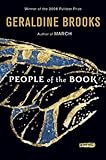
If I was required to pick an absolute favorite from the year, this one might be it. People of the Book by Geraldine Brooks became a new favorite of mine immediately, and made Brooks an author whose books I will now keep a special eye out for. Describing the plotline of the book really does not explain how beautifully the story is told. It is the story of a book, a manuscript that has been rediscovered, and is now being researched and restored. As the one in charge of restoring the book, Hanna, discovers more about its history, the reader gets a glimpse of that piece of the book's life. Like I said, that description does nothing to describe the depth of feeling that comes through in each of these stories. I love books, and book history, but I think that this book would appeal to anyone who loves to read well-researched historical fiction.
I Am the Messenger was the second book that I read by Marcus Zusak (the first being The Book Thief), and it placed him solidly on my list of favorite authors. The story follows Ed Kennedy, an underage cabdriver who doesn't have much of a plan for his life, a fact which seldom bothers him. Then he stops a bank robbery, and his life becomes a kind of mystery. He begins receiving playing cards, aces, which have cryptic instructions on them that he struggles to decipher and follow. His life changes dramatically as a result of these strange messages, in a way that is uplifting but not pedantic. Ed is a fantastic character, one who you love to root for, who is deep and complicated and not perfect, but who you would love to have as a friend. This book is often catalogued as a teen book, but it would be enjoyed by teens and adults of any age.
Another teen book, actually a series, that can easily be appreciated by adults (I've actually recommended it to several friends) is the Eugenides series by Megan Whalen Turner. This series consists of The Thief, The Queen of Attolia, and The King of Attolia. I wish I knew whether or not there were going to be more books in this series, because the character of Eugenides is terrific, and I can't wait to find out more about him. The best part about this series is how crafty and surprising Eugenides is. The second best part is the fact that none of the characters are formulaic - they are all surprising and individual, never doing what you would predict. This is an excellent series for middle schoolers on up to adults, and would be enjoyed even by those who don't tend to read fantasy.
For some reason, The Curious Incident of the Dog in the Night Time, by Mark Haddon, reminds me of I Am the Messenger. I think that part of it has to do with the way that they both hook you instantly. They are both quick reads, and once you begin them it is almost impossible to put them down. Nothing in the plot is similar to I Am the Messenger, however. The Curious Incident is about a 15-year-old autistic boy who sets out to discover the identity of the murderer of his neighbor's dog. It is told in first-person point of view, so we know every thought that goes through Christopher's head. The fact that he is a high-functioning autistic makes this a fascinating story to read. He is logical to the point where he can't understand metaphors or cliches, so he just responds as if he did not hear them. His interactions with others make this story humorous, but it is also dark in many ways. Enough babbling, I just loved this book.
My final recommendation of favorite reads of the year was Half of A Yellow Sun, by Chimamanda Ngozi Adichie. This was a heartbreaking book, about the seccession of Biafra from Nigeria in the late 1960's. Biafra's symbol is the rising sun, a theme that is carried throughout the book. The war ends badly for the Biafrans, as the validity of the country was never recognized by most of the world. The story is told from the point of view of three different people, whose lives interact in various different ways. It is beautifully told, and even though the reader knows the outcome of the war, the book itself is filled with hope. It is a long book, and a difficult read, but well worth the time.
And there you have it. My five top favorites of 2008. If you are interested in seeing what the other 16 titles were that I labeled as recommended, just click on the link in this post.
Happy New Year's Eve!

Tuesday, December 30, 2008

Books I read this year, but just couldn't bring myself to finish

Because today is the second to last day of 2008, I thought I would do my first year end wrap-up post. In this post I would like to talk about the books that I began but was simply unable to finish. There are a variety of reasons why this is the case - it really depends on the book.
The first book on this list is God is Not Great by Christopher Hitchens. I have to begin by saying that I do believe in God, but I went into this book with an open mind, because I do agree with some of Hitchens's main points (religion can be bad, after all). And I actually got through more than 70% of the book. But I just had to stop. Hitchens just kept restating his point over and over, and many of his examples did not even seem to apply to the issue. He was just mad and wanted to rant and rave a little bit. I had had enough.
This next book I actually almost finished. But then I couldn't keep reading. I honestly am not sure exactly what it was, but even after reading 80% of Call Me by Your Name, by Andre Aciman, I just did not care, and did not even want to know what happened to the characters. This happens to me sometimes - I put in a great deal of effort to read a book, hoping it will make it worth my while, but I just give up if it doesn't seem to be going that way. Sometimes I'll stick it out, and sometimes not, and this just happened to be one of those that I did not.
Mothers and Sons, by Colm Toibin, is another book that I probably could have stuck with, but I could not really find a reason to. I think part of it was my frame of mind at the time I was reading it. The stories tended to depress me, and I could not seem to find any redemption from any of them. I probably only read two or three, so I may have missed a very good story or two, but the initial stories did not keep me reading long enough to find out.
Rose of No Man's Land, by Michelle Tea, was one of those books where I was just looking for a chance to put down. I had no good reason for why I didn't like it, I simply was not enjoying the book, but I continued to read it. Right up until Rose did something completely disgusting that, while it was definitely an excellent way to characterize her, fully put me off of this book for good. It may seem petty, but I will quit reading a book if the characters continually make decisions that I have a difficult time reading about. This was one of those books.
A Walk Through Time, by Stanley Liebes, seemed like an interesting book, but I found after reading about a quarter of it that I just didn't feel like slogging through to the end. It was written based on a display at a museum, one that showed the timeline of the universe and Earth's history over a mile-long walk. It is a very intriguing idea, and I'm sure it made for a fascinating live display, but reading a book based off of it was slow and disjointed.
Poor Carlo Chuchio, I just could not make myself care about his story. In The Golden Dream of Carlo Chuchio, by Lloyd Alexander, Carlo sets out on a grand adventure, meets all sorts of interesting characters, and, presumably, finds what he seeks and learns about life in the process. This is the only children's book on this list, because typically I will give books written for kids a little bit more leeway when it comes to keeping me interested. But in this case, I gave this book a good chance, and just could not complete it.
The final book on this list, Wizard of the Crow by Ngugi Wa Thiong'o, is interesting because it is the only book on the list that I am not sure why I stopped reading. I think it was simply moving too slowly for me, and it was such a large book that I feared I would never finish it. But I think that I will be giving it another try. This one has officially been added to my to-be-read list, and will be given another chance.
I would be interested to know if anyone else has read any of these books, or has any opinions on them. Did you love or hate any of the books listed here? You may be able to convince me to give others a second chance as well.

Monday, December 29, 2008

Warriors series by Erin Hunter

Well, I didn't get much reading done over my holiday trip, but I did manage to finish one book. And that book wrapped up a series. I review the Warrior books as a series because reviewing them individually gets seriously repetitive and does not do them justice. This is actually the second of these series that I've read - I read The New Prophecy series before reading this one (my review is here), but reading the series out of order is not really that big of a deal.
I have to say that if these books had been out when I was in elementary school, they would have been my favorites. Even with the level of cat-against-cat violence, I think I still would have loved the idea of these wild forest cats living according to a warrior code. The first book in this series, Into the Wild, introduces us to Rusty, a house cat who feels the call of the forest. He meets some of the warrior cats of ThunderClan, and is accepted among them as an apprentice warrior, and renamed Firepaw. He must deal with prejudice against "kittypets" such as him, and prove that he can be a loyal and valuable member to ThunderClan.
The main plotline of the series as a whole is Firepaw's rivalry with Tigerclaw. In the first book Firepaw discovers Tigerclaw's treachery - he would do anything to gain power, even kill members of his own clan. Later, as Firepaw becomes a full warrior and is renamed Fireheart, he must continue this battle. It isn't until the third book, Forest of Secrets, that Fireheart is able to prove Tigerclaw's treachery and get him exiled from the clan forever. But that is not the end of his troubles with Tigerclaw. Tigerclaw continues to plague ThunderClan, and carries a personal vendetta against Fireheart. In addition to this main plotline, the clan must hold its own against the three other clans of the forest, as well as dealing with natural occurances like drought, storms, and fire.
I have to say that I do love these books, although they are a bit on the overdramatic side at times. And the violence is not something that can be ignored. These cats fight and kill each other, and are also killed by predators like birds of prey and feral dogs. They live a tough life. But for a kid that can handle that level of violence, these books are great. Older elementary school kids or younger middle schoolers are usually who I recommend this book to. There are powerful themes of acceptance and loyalty, trust, friendship, and family. And now I get to move on to another book in this world! The books in this series are: Into the Wild, Fire and Ice, Forest of Secrets, Rising Storm, A Dangerous Path, and The Darkest Hour.

Saturday, December 20, 2008

Challenges for the new year

I am well aware of the fact that I have severely over-extended myself in terms of the challenges that I signed up for for 2009. You may have noticed that my list just keeps getting longer and longer, and I'm sure you are wondering if I've lost my mind. The answer: probably. I will be discussing next year's challenges in more depth at the end of this month, or the beginning of the next. For now, I wanted to bring up two that I have signed up for that are going on now, but that will finish before the end of next year. (I have already mentioned the From the Stacks Challenge, which will be wrapping up at the end of January.)
The first of the two that I have not yet read anything for (shame on me!) is the Medieval Challenge. This one goes until the 8th of February, 2009. This means that I better get a move on, since I signed up to read six titles. So far on my list are one non-fiction about the time period, one book written during the time period, and a modern book about the time period. (I plan on doing two each.) The titles are: Medieval Britain: the age of chivalry by Lloyd and Jennifer Laing; The Canterbury Tales by Chaucer; and Year of Wonders by Geraldine Brooks.
For the second challenge, the Really Old Classics Challenge, I somehow went just a little bit insane and decided that I would read 29 books on this topic. I think I wasn't thinking very clearly that day, but now I feel like I can't go back on that number. Silly, right? Anyways, the challenge runs until the end of July 2009, so I have more time. The idea for this challenge is to read the classics written before the 1600's. I have already read a few in past years, so my goal is to read titles that are new to me. If I run out, rereading these classics is never a bad thing.

Oh, and on a completely separate note - I will be out of town for the next week or so. I may manage to get a review up, if I finish a book and have the time (not likely), but don't hold your breath.
Happy Holidays everyone!!

Math Doesn't Suck by Danica McKellar

This is a fantastic book. It put me off a little bit at first with its teen-magazine-like cover, and its subtitle - "how to survive middle school math without losing your mind or breaking a nail". But McKellar does a terrific job of explaining a lot of difficult math issues in a way that is fun and makes sense. I read this book because I tutor kids who are mainly doing middle school level math. This book gave me a lot of ways to help explain things when kids are stuck.
One thing to know going into it, in case it's not obvious enough from the cover - this is a book geared entirely towards middle school girls. Middle school boys are not at a level of maturity where they can read a book that talks about cute boys, crushes, shopping, and make-up, and take it with a grain of salt. They simply wouldn't be able to get through it. The idea is to make girls feel like it's okay to be smart and good at math. So many girls feel "nerdy" if they're good at science or math, and nerdy is absolutely what most girls do not want to be in middle school. This book is for girls who are tempted to pretend they are someone else, just to be approved of. Math Doesn't Suck is full of examples of successful grown women who use math every day in their jobs, and are glamorous at the same time. The message here is "being smart is cool" and never dumb yourself down for other people. I admire McKellar for using her star power in this way - and I wish her and all the middle schoolers who read this book luck. Middle school is difficult, but if girls can use this book to help them gain the confidence they need, they'll be on the right path.

Friday, December 19, 2008

Jack Plank Tells Tales by Natalie Babbitt

Jack Plank is an out-of-work pirate; he lost his job because he just wasn't very good at it, and times were getting hard for his ship's crew. So they let him off in a Caribbean town called Saltwash, where he tries to make his way. He takes a room at a boardinghouse where they know he was a pirate, and they give him a week or so to find a job and prove that he plans on being a productive member of society.
What follows is a series of stories told by Jack, each one outlining why he is not able to do a specific job - he has a story for each one, although sometimes the story does not seem to directly relate to the job itself, or why he is unable to do it. But in the end, Jack discovers what he is able to do - tell a story!
The stories are whimsical and often silly, as are his audience's responses to his tales. This book was written for kids in grades two through six, but would probably be enjoyed by the younger ones more. It would also be a fun story to read aloud to, or along with first or second graders. It is not a book that would be enjoyed as much by every age, but for younger elementary school children, it's a great choice.

Thursday, December 18, 2008

Under the Net by Iris Murdoch

Here is my third entry for the From the Stacks Challenge. (Previous entries can be found with the label below.) This is one that I've had for about a year - it was a Christmas gift from my brother-in-law and his girlfriend last year, and it took signing up for a challenge to get me to read it. Not because I wasn't interested, it's just very difficult to get me to read my own books. That's specifically why I sign up for these sorts of challenges.
I knew nothing about this book, beyond the information anyone can glean from the cover print. The book was written in 1954 by Iris Murdoch, who wrote more than 20 books. This one takes place in London, presumably during the time that it was written. I found Under the Net to be more entertaining than I expected. The main character, Jake Donaghue, is a man who is afraid of hard work, who never has a job or a place to live, but manages to live well off the generosity of this friends. The only job he seems to do is as a translator for a french author. Jake wants to be a writer in his own right, but as mentioned before, he's not very good at actually working on something.
Jake's life changes when he is once again without a place to live, and gets in contact with his old girlfriend and her movie-star sister. This brings him back into contact with Hugo, the man who he broke off contact with years before. Jake has to come to terms with a variety of opinions he holds about these friends from his past before he can face his future.
I really enjoyed reading this book. It is hard to explain how funny the book is - there are parts that seem like some kind of movie caper or heist. Jake's character is very well drawn - you root for him even when he's behaving like an idiot. His friends are interesting and varied, and not like anyone I know. And once Mister Mars, the movie dog, joins him (in a very funny kidnap-the-dog scene), I was loving it. Written by someone less talented, this book could have been terrible, but Murdoch does a wonderful job telling the story with both humor and drama.

Wednesday, December 17, 2008

Brisingr by Christopher Paolini

I first picked up the Inheritance Cycle books when I was doing a project on books that were written by teens, last fall. While I was impressed that Eragon was written by a 15-year-old, it really wasn't very well written. It was fun to read, and if the story was derivative, well, what can you expect from a teenage fan of fantasy writing their first book? I did read the second book soon after, and found that the writing had gotten better. Brisingr is definitely readable, Paolini's style has improved, and I am still enjoying the story of Eragon and his dragon Saphira.
I was honestly really surprised by some of the turns the plot took in Eldest - I wondered to myself how Paolini was going to solve the quandries he had created. Nothing is really resolved in this book, but the plot definitely moves forward, and I have hope that Paolini will be able to resolve all of the loose ends satisfactorily in the fourth book. My main complaints about this third title are probably the same as my complaints for the second book. It feels as though Paolini is writing the book with a thesaurus at his side, and sometimes he seems to choose a word simply because it is larger and less well-known, not because it fits perfectly in a sentence. Similarly, his use of the dwarven, elvish, and other languages he creates for his world is ponderous at times.
I would recommend this series to any teen who enjoys fantasy, especially dragons. The book does not seem derivative if you have less to compare it to, and it exposes anyone who reads it to the themes of the hero's journey. This book is the least derivative so far - revelations about Eragon's true parentage make it so that he is no longer the son of Darth Vader with sibling he never knew of. We are no longer following as closely to a Star Wars plot-line, although, as mentioned above, it is still a story of the hero's journey, making it extremely recognizable to anyone who is well-read. These books are fun, although they could not be called light reading, and should be given a chance beyond just groaning about how similar they are to every other fantasy out there. They do stand on their own.

Friday, December 12, 2008

Textbook Round-Up (Part II) - Reference and Web Programming

Whew, I am finally done for the semester. Next semester I will only be taking two classes, so hopefully I won't be quite so overwhelmed with school.
In my last textbook post, I talked about all of the books used for my Intellectual Freedom and Youth course. This post will cover two classes, with only three books.
The first is the two-volume set Introduction to Reference Work, by William A Katz. These are very comprehensive books, covering all sorts of reference needs. Katz analyzes not only the source of the materials he discusses, but also the cost, and how they could be used at different types of libraries. The first volume covers all the necessary sources: encyclopedias, dictionaries, periodicals, ready reference, etc, etc. The second volume discusses actually doing reference work. My only complaint with these books was that the information on the internet was out-of-date. Really anything that was published in 2002 and talking about the internet is going to be behind, but some of the information seemed like they didn't even bother updating it for the 2002 edition. This was disappointing, to say the least. Other than that these books were an excellent match for the class, and would be very useful for any new librarian learning the ropes.
The only textbook used in my web programming class was HTML, XHTML & CSS, by Elizabeth Castro. This was a stellar book, one I would highly recommend to anyone who is learning how to work with any of the above languages. It is also excellent for reminders, in case your skills have become rusty. I even had the opportunity to recommend this book to a patron who was looking for a good book on the subject. The class was good, although I'm still not sure how it applies to my overall Library Science degree, and I doubt I will be pursuing web design in the future, but for learning about it, this book was great.
And that's another semester finished! Next semester it will be Collection Management, History of Library and Books, and Evaluation of Youth Services. I am not joking when I say I am really excited.

Monday, December 8, 2008

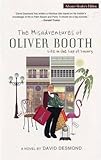
The Misadventures of Oliver Booth by David Desmond

Oliver Booth is one of those people that you either despise or feel sorry for, sometimes at the same time. His character has absolutely no redeeming qualities, and the author is quick to let you know that no one else on the planet seems to like him very much either. In fact, Desmond works so hard to make us dislike Oliver that it is really difficult to read about him, or care what happens to him, unless you enjoy reading about people who are constantly embarrassed and miserable.
Oliver Booth is an "antiques" dealer in Palm Beach, Florida, where he runs a shop full of replicas that nobody ever sees, because he gets hardly any business. When he is lucky enough to acquire a sales clerk who is intelligent, friendly, and French, his luck begins to turn around. He is noticed by one of the wealthiest women in town, and he and Bernard are sent to Paris to choose antiques to decorate her guest house. Mrs. Van Buren sends them because of Bernard, not because of Oliver, and she seems to think that it is her place to see that Oliver is continually humiliated. "People like Oliver" need to be taught a lesson. A lesson in what? How to not try to be something you are not? In Oliver's case he is constantly pretending he is part of the upper-class society of Palm Beach, which he can never join due to his lack of money and good looks.
This whole book was an inside joke about the society of Palm Beach - it could be called satire, but it was so full of stereotypes and cliches that it lacked the bite that most satires have. I generally don't enjoy watching as people make fools of themselves, so I really did not enjoy watching Oliver bumble through life, but I understand that I am in the minority there. I suppose that I just do not find the foibles of the really-rich to be all that funny, and the bad and cliched dialogue and superficial, stereotypical characters certainly added nothing to the story. Overall, if more books are written about Oliver and his hi-jinks (which it seems is the case), I will not be reading them.