Showing posts with label Medieval Challenge. Show all posts

Saturday, March 14, 2009

Medieval Challenge Wrap-Up

At last, I have finished this challenge. The official end date was February 8, 2009. I think that I had only read three of my books by then. Which I think qualified for a lower level of the challenge, but not the six books I had signed up to read. The goal of the challenge was to read books related to the Medieval time period. These could be historical fiction set in that time period, non-fiction about the time, or books actually written in the middle ages. I chose to do two books from each category.
For the historical fiction books I read:
For the non-fiction I read:
And the texts actually written during medieval times:
Participating in a challenge that covers a specific time period is a great way to learn more about the time. Reading from the non-fiction and the fiction, as well as reading books written during that time really gave me some new ideas, and a greater understanding of the medieval time period.

Friday, March 13, 2009

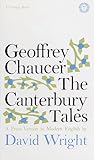
The Canterbury Tales by Geoffrey Chaucer

I have finished the books that I had set aside for this challenge! Yay! Sure, it's a month late, but I have enjoyed sticking with it. I'll have a challenge wrap-up post up soon.
For the Medieval Challenge, two of the books I read were texts that were written during the medieval period: Le Morte D'Arthur and The Canterbury Tales. I learned my lesson after the first one, and decided to go with a Modern English version for Chaucer. I chose David Wright's Modern English prose translation, written in 1964. I decided on a prose version because I really just wanted to know the stories, and if I'm reading a translation anyway, I might as well read it in prose form. As Wright points out in his introduction, it can be difficult to translate poetry while trying to maintain the poem, creating difficulties for the reader. One thing I found interesting was that for two of the tales, Wright simply gives the reader the gist of it, and does not bother including them in the book. He seems to feel that, even translated, these pieces are unnecessarily long-winded and unwieldy, and we would be better off without them. These are "The Tale of Melibeus" and "The Parson's Tale".
I was so surprised by the vulgarity, sex, and humor that were present in these tales. It was fascinating how the tales swung back and forth between morality stories about the saints and stories about wayward wives and their sexual exploits. I found some of the stories very very funny, which was another surprise. It's fantastic that even though this was written over 600 years ago, we still can find so many points of commonality. Of course, our views of women have changed (for the most part), and the overall culture's views towards God and the Church are different, but these details only make the tales more intriguing. I think it is truly incredible that we have this opportunity to read stories that give us a glimpse of what life was like centuries ago. And it is so much fun to read. Really, this is a very highly recommended translation for anyone who is considering reading The Canterbury Tales.
Reading classics is so much fun, I'm doing it for multiple challenges! This book fits right in with the Really Old Classics Challenge and the Centuries Challenge. It is also my "C" book for the A-Z Reading Challenge.

Saturday, February 28, 2009

The Pillars of the Earth by Ken Follett

Here is another book for the Medieval Challenge that I was unable to complete before the challenge ended. Only one book to go! I chose this book because it is historical fiction that takes place during the Medieval period - the twelfth century to be exact. The final book I am reading is another Medieval text - The Canterbury Tales, by Chaucer, in a Modern English prose format.
The Pillars of the Earth is a rather difficult book to describe for a review, but I will do my best here. It begins in 1123, with a description of a hanging, where the lover of the man being hanged puts a curse on the three men who have sentenced him. From there it jumps to 1135, where we begin to learn the story of Tom Builder, an out-of-work mason who's greatest dream is to build a cathedral. After this point it is a little bit difficult to give any kind of coherent synopsis without just telling you the story of the entire book. We meet Prior Phillip, a monk with a big heart who constantly underestimates the cruelty and maliciousness of others; Ellen, the mother of Jack, who is the girl who cursed the three men in the prologue, who now lives with her eleven-year-old son in the forest; William Hamleigh, the son of a power-hungry mother and father, with a mean streak in him that makes him the obvious villain; and Aliena, daughter of the Earl of Shiring, who follows her own heart, even when it ends up costing her family everything. These are the characters that the novel follows over thirty years, as they are all tied into the fate of the building of the Kingsbridge Cathedral.
This book is an incredibly in-depth and well researched story of this time period, known as The Anarchy, a time of civil war in England between Empress Maud and King Stephen, after the first King Henry dies without leaving an heir. The town of Kingsbridge is not a real place in England, but modeled after an amalgam of many such towns of the middle ages (I think there is actually a Kingsbridge in England, but this is not supposed to be the same place). The characters are all very well drawn, although Follett's efforts to make us hate William are a little bit over the top (how many women does a man need to rape before we get the idea that he's the bad guy?). And all throughout the book Follett does an excellent job of really making us care about the characters, through the tradgedies and disappointments, as well as through the good times. The other issue I had is minor, but it seems that Follett does not trust his readers to remember what happened 100 pages ago, so he reiterates the story for you to the point where you want to say, "Yes I am reading this book, I know about that." But maybe for some readers, that is helpful. Either way, I highly recommend this book to anyone who enjoys family sagas or historical fiction, or anyone who just enjoys a good story.
In addition to the Medieval Challenge, this book is another one I am using for both the A to Z Reading Challenge and the New Author Challenge. I am also using it for the What's in a Name Challenge. That is a fun one where you read books with a specific theme in the title. This title is for category number five - a book with a "building" in the title ("pillars" are part of a building, right?).

Monday, February 16, 2009

Le Morte D'Arthur by Sir Thomas Malory

According to goodreads.com I have been reading this book for over a month. I would just like to point out how ridiculous that is, seeing as how almost no book ever takes me that long. Le Morte D'Arthur is definitely not a book that can be taken on lightly.
I read this book as part of the Medieval Challenge, which ended a few days ago. I wanted to read a couple of books that were actually written during Medieval times, but that may have been my downfall with this particular challenge. Spending a month on one book for the challenge is not the best way to finish when your goal is six books. So, anyways, I will continue posting as I read the last two books I planned on for the challenge, but only here on my blog.
Le Morte D'Arthur is the classic written compilation of the stories of King Arthur. It was written by Sir Thomas Malory in the early 1400's and printed by William Caxton in 1485, after Malory's death. Malory himself wrote the stories that were already known in various other French and English translations. He brought them all together in written form. It is titled Le Morte D'Arthur because Caxton made a mistake in thinking that the title for the last part of the book was meant to be for the whole. The story is divided into twenty-one books, each one further divided into chapters which are then summarized by Caxton.
This book was almost impossible for me to finish, for a variety of reasons. First, it is over 900 pages long. Secondly, it is written in Old/Middle English, which is not easy to read quickly. I would have given up on it, except for the fact that I really did want to read the book in its entirety - I really wanted to know the original stories that are the basis for so much modern (and past) fantasy, in books and movies. I was unprepared for the repetativeness of the story. There are endless listings of knights, jousts, tourneys, and a flock of nameless damosels, maidens, and gentlewomen. (The only women that need names, it seems, are those who stick around for more than a chapter or two, or those who are exceptionally good or evil; knights on the other hand get to have multiple names no matter how unimportant.) It is interesting to see how the stories are used as moral examples for their times - especially in the Holy Grail chapters, only the knights that are the most pure and holy have a chance of finding what they seek, and then they get the honor of dying and going straight to heaven when their quest is done.
All in all, I am honestly glad to say that I have read this book, but I would not necessarily recommend it to anyone. If there is a good modern version out there, one that doesn't alter the story in any way, but just makes it easier to read, that may be the way to go.
I also read this book for the Really Old Classics Challenge and the Centuries Challenge. This is the first book read for both of those, although I do have a stack sitting by of really old classics to read. For the Centuries Challenge, this book obviously qualifies for the 15th century.

Friday, February 6, 2009

Women in Early Medieval Europe 400 - 1100 by Lisa M Bitel

This was my third book read for the Medieval Challenge, and the second of the non-fiction books I have read about this time period. Actually, the other non-fiction book I read discussed the true medieval time period, 1040-ish to the 1500's, and this book obviously covered an earlier time period, 400 to 1100. But as they focused on different topics, there would not have been much overlap anyway.
I have to say that I loved this book. I have not read a history book that I enjoyed so much in a long time. Women in Early Medieval Europe could easily be used as a textbook for a class on either early medieval history or women's studies. It is an extensively researched and well notated book that focuses solely on women, and their impact on the history of this time period, as well as the time period's impact on them. Bitel does an excellent job of finding the stories about women from the little that is said about them. She points out that the histories written during this time period are by men, and women are only discussed if they are somehow connected to the male main characters, as mothers or wives. The only women that merit real attention are those that either break the rules set for them by society, or who are especially pious and noble, and therefore used by the historians as examples of what women should or should not be.
In addition to the histories written during these time periods, Bitel examines records of laws and accounts, often finding evidence of women when it is not explicitly stated. And of course we know that women existed, because people continued to procreate and extend their reach over the land. Bitel discusses the reasons for why women were included or left out of records to great extent. This is a fascinating book both on the level of women's history and early european history.
Women in Early Medieval Europe is part of the Cambridge Medieval Textbook series. For anyone interested in good non-fiction about this time period, I would recommend checking out any books in this series.
I am also using this book for my first read in the Dewey Decimal Challenge. I am a little bit confused by the way this challenge is structured, but it looks like I can read the books out of order (thank goodness). So this book is for the 900's category - Geography and History (this book's specific Dewey number is 940.1).

Thursday, January 29, 2009

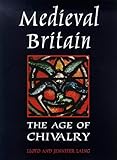
Medieval Britain: The Age of Chivalry by Lloyd and Jennifer Laing

This book is my second read for the Medieval Challenge, and the first of the non-fiction books that I have chosen to read for it.
Medieval Britain: The Age of Chivalry is laid out like a text book, and covers the time period from the Norman Conquest in the 1000's to the 1500's. Each chapter focuses on a different area of Medieval life, focusing on Britain, but also giving details about Europe at points. The chapter headings are Society; Castles; The Countryside; The Church; Towns; Trade and Communications; Science and Technology, Superstition and Medicine; Leisure and Fashion; and Intellectual and Artistic Endeavor. This gives you an idea of what information this text has to offer.
Although the information given in this book is interesting, I found it to be too broad of an overview for what I was hoping. This book is definitely a good starting point for someone looking to read more about medieval times. I will have to explore further for a book that delves more deeply into this time period, however.

Wednesday, January 7, 2009

Year of Wonders by Geraldine Brooks

To begin this review, I have to say that I am a big Geraldine Brooks fan, this being the only novel by her that I had not previously read. Unfortunately, this is not her best book.
Year of Wonders takes place in the 1600's, in a tiny mining village in England. The narrator is Anna, a young woman who has lived through the year, and helped to bury more than half the people in this town. Her lodger was the first person to die of the Plague, which takes her children and many others as well, eventually. In an effort to confine the disease, the town decides to cut itself off, allowing no one in or out, and receiving help from the neighboring towns only when that help can be left at a distance. Their efforts keep the disease from spreading any further, yet perhaps causes more deaths in their own village.
The heroic efforts of this small village come at a great cost. This book is definitely more violent than I had expected. Some of it is simply the violence of the time: witch trials, punishments for theft. But some of it seems unnecessary, although I understand that Brooks was trying to convey the madness that some of the villagers struggled with in their grief. The book is wonderfully well researched, which makes for a story that feels true. It is a fascinating read for anyone interested in the Plague, or in this time period, but it it not easy to read about what these people went through. Life was hard enough in the Medieval Period without the Plague.
This is my first review for the Medieval Challenge. I am really looking forward to the other books I'm reading for this challenge. Hopefully I can get it done by February 8th! This book also qualifies for the A-Z Challenge. As I am doing a to z authors, this book will stand for my "B" author.

Saturday, December 20, 2008

Challenges for the new year

I am well aware of the fact that I have severely over-extended myself in terms of the challenges that I signed up for for 2009. You may have noticed that my list just keeps getting longer and longer, and I'm sure you are wondering if I've lost my mind. The answer: probably. I will be discussing next year's challenges in more depth at the end of this month, or the beginning of the next. For now, I wanted to bring up two that I have signed up for that are going on now, but that will finish before the end of next year. (I have already mentioned the From the Stacks Challenge, which will be wrapping up at the end of January.)
The first of the two that I have not yet read anything for (shame on me!) is the Medieval Challenge. This one goes until the 8th of February, 2009. This means that I better get a move on, since I signed up to read six titles. So far on my list are one non-fiction about the time period, one book written during the time period, and a modern book about the time period. (I plan on doing two each.) The titles are: Medieval Britain: the age of chivalry by Lloyd and Jennifer Laing; The Canterbury Tales by Chaucer; and Year of Wonders by Geraldine Brooks.
For the second challenge, the Really Old Classics Challenge, I somehow went just a little bit insane and decided that I would read 29 books on this topic. I think I wasn't thinking very clearly that day, but now I feel like I can't go back on that number. Silly, right? Anyways, the challenge runs until the end of July 2009, so I have more time. The idea for this challenge is to read the classics written before the 1600's. I have already read a few in past years, so my goal is to read titles that are new to me. If I run out, rereading these classics is never a bad thing.

Oh, and on a completely separate note - I will be out of town for the next week or so. I may manage to get a review up, if I finish a book and have the time (not likely), but don't hold your breath.
Happy Holidays everyone!!