Thursday, April 30, 2009

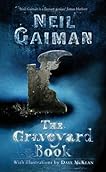
The Graveyard Book by Neil Gaiman

This book is well-known by now, but I'll give you a brief plot summary anyway. Bod (short for Nobody) Owens was raised by ghosts in a graveyard, although he is a living child. His family was murdered when he was barely old enough to toddle out of harms way, but because he was a curious child, he managed to escape the murderer by finding friends among the ghosts. The graveyard he lives in is unused, and is something of a historical site and nature preserve, although no one really goes there. So Bod is left to grow up with the ghosts, and with his guardian, Silas, who is not a ghost, and so can leave the graveyard to find food for Bod. But the man who killed his family, Jack, is still out there, and one day Bod will have to face him, or he may never be able to leave the graveyard.
I really loved this book. It surprised me in a lot of ways. But Neil Gaiman is nothing if not a surprising and adept story-teller. The book was creepy, but I didn't find it quite as creepy as Coraline. The reader begins to accept that the graveyard is a normal place for Bod, so while it could have been made creepy, instead it just seems sort of normal. Although there are still frightening characters, such as the ghouls and the Sleer. Bod was a different sort of character than I expected as well, and the choices that he makes when interacting with people of the world outside the graveyard were surprising, and showed a character with a lot of depth. This would be a great book to read aloud to grade school children, and would be enjoyed by older kids of all ages as well. And I can't help imagining what sort of movie it will make.

Wednesday, April 29, 2009

Wild Highland Magic by Kendra Leigh Castle

Bastian an Morgaine is the last in a line of sorcerers who have been plagued by a curse for the last five generations. Bastian had hoped to be able to rid himself of it, and even though he takes steps to fight the curse, he truly does not have much hope. When he meets Cat, MacInnes werewolf, his life completely changes. Bastian is from the parallel world of Coracin, and Cat is from Earth. Bastian has fled to the MacInnes home in Scotland to recuperate and plan his next move, but his timing is terrible. He is there when all of the far-flung family converges for a reunion, which is what brings Cat, along with her two younger sisters, Poppy and Skye, and her estranged father. Events come to a head as old rivalries are brought up and new dangers surface. And of course there is a good amount of love at first sight (or bite, in this case).
I actually enjoyed this book a lot more than I expected to - I tend to occasionally judge books by their covers, and this one just seemed too typical. Thankfully though, the story was anything but. I also discovered that it is the third book set in the world the author has created. (The covers for the other two books are disturbingly similar to this one.) While reading this book I did not feel like I missed anything, as Castle does a good job of giving background information, but it was obvious that there was more history to the story. The other characters were clearly important to the author, as were their stories, even though they weren't the main protagonists of this book. The romance was lovely - and it's not just Cat and Bastian that get to fall in love, which was nice. The world as Castle has created it works very well, and I look forward to catching up and reading the other two books in this series now.
This book is great for several challenges, but the two important ones are the Romance Reading Challenge and the Love Bites Reading Challenge. The Romance Reading Challenge is pretty self-explanatory. The Love Bites Reading Challenge is similar, but involves paranormal romance. After reading this book, I decided that for the rest of the challenge I am going to read the previous two books in this series. Because this book will be released in May of this year, it is part of the Pub 2009 Challenge. And I am also using it for RYOB 2009 and the New Author Challenge.

Tuesday, April 28, 2009

Pride and Prejudice and Zombies by Jane Austen and Seth Grahame-Smith

This book was a life-saver during the read-a-thon. It definitely kept me going when my brain was starting to wander, and I myself felt a bit zombie-like. The first line alone makes me giggle every single time I read it:
"It is a truth universally acknowledged that a zombie in possession of brains must be in want of more brains."
This sentence shows how the whole book is written - much of it is Austen's original text, which Grahame-Smith has added to to make it a horror story. It was very well done, although you could see the difference between the two writers clearly enough (if the fact that one wrote all the zombie parts wasn't clue enough). Austen is still very witty, and while Grahame-Smith tries to keep up with her, he definitely pales in comparison.
I loved the original Pride and Prejudice, so I wasn't really sure what to expect from this book, other than that I really hoped to enjoy it. And I found this book completely entertaining. The level of violence actually surprised me, which sounds stupid, since it is a zombie book ("Now with ultra-violent zombie mayhem!"). But the characters themselves are ridiculously violent. Elizabeth spends most of her time contemplating killing something, whether that be zombies, or someone who has offended her or her family's honor. It is actually very amusing, I was just surprised. One of my favorite things about the book is the discussion questions at the end. Those made me laugh out loud.
I am not sure that I would recommend this book for everyone. I got copies from the library for two male friends of mine, one who has read (and enjoyed) Jane Austen, and one who hasn't. So far the Austen reader hasn't finished the book, but my other friend finished it before I did and loved it. So it's good for zombie-lovers, and for Austen lovers who enjoy zombies, but for Austen lovers alone? I can't say.
I signed up for the Suspense & Thriller Reading Challenge ages ago, and I somehow have not managed to read anything that I think qualifies all year. The goal of the challenge is to read 12 thrillers from a list of thriller sub-genres. There are many sub-genres to choose from, so picking twelve is not difficult. This book fits nicely into the Comic Thriller, described as "a thriller played for laughs, whether through a spoof of the genre or wisecracking interplay between the protagonists." I think this one fits both of those descriptions. It was also just published in 2009, and so qualifies for the Pub 2009 Challenge.

Monday, April 27, 2009

The Brief Wondrous Life of Oscar Wao by Junot Diaz

The Brief Wondrous Life of Oscar Wao won the Pulitzer Prize for Fiction in 2008, which is why it was in my pile of books to read. I also went to a book club discussion about it.
The book is really difficult for me to describe. It is basically the story of Oscar, a hugely obese "Dominican ghetto-nerd" who is a character you love to root for, but at the same time he is incredibly pathetic and hopeless (and thus frustrating!). Oscar's family is from the Dominican Republic, although he and his sister Lola mostly grow up in New Jersey. Their mother's family did not survive the Trujillo dictatorship, and she herself fled to the United States as a teenager. Most of the story, including the history of the family, is told by Yunior, a sometime-boyfriend of Lola's who tries to help Oscar out of his depression in college. Two of the sections are told by Lola, but she only speaks of her own view of the situation, and she seems to be writing to Yunior, though it is difficult to tell.
What I liked best about this book was the writing - it was so much fun to read, even if it was hard to follow at times. Yunior throws in a ton of Spanish, as well as a tremendous amount of nerd-slang that I found really amusing. Most of it you can figure out from context, because it is certainly not explained for you at all. Yunior's voice is entrancing, in a way that I would not have expected.
As one of the 12 Mini-Challenges that I am doing this year, I went to a book discussion (#10). It was really interesting to discuss this particular book, because it is difficult, and sometimes inaccesible. There were seven of us at the meeting, I think three of whom had not finished the book. We brought up some topics that we thought were interesting, though we did not delve very deeply into any of them. It was more of a sharing of our thoughts, rather than really digging into the book. One thing that we didn't talk about much was the mysticism in the book, the presence of the golden Mongoose and the Man Without a Face. But it was otherwise a good book chat. I also read the book for my 999 Challenge, for which I am reading all prize winners (my list for this one is here). And, not to leave out anything, I am also reading this for the New Author Challenge and the A-Z Challenge.

Sunday, April 26, 2009

The 16% Solution by Joel S Moskowitz, JD

The original 16% Solution came out in 1994. I just finished the 2009 edition, which has been updated in many ways. The 16% Solution is about investing in tax lien certificates, which is something that I had never heard of before. Basically it involves buying tax liens from county governments, and then rather than the county earning the interest, you now earn the interest. Only 23 states sell their tax liens in this way, but Moskowitz includes all of this information for you.
The major differences between this edition and the first one is the fact that many counties now do their auctions online, or at least have websites that have very detailed information about the procedure. Moskowitz includes web addresses for all of the relevant counties. He also includes advice that is based on the current economic situation, rather than what the economy looked like back in 1994. The world is a different place now.
At first I was wary of tax liens - I felt that it must be in some way bad for the person whose lien is being sold, the person who has been unable to pay their property taxes. I would hate to participate in a system that made it easier for people to lose their homes because I bought the lien on their unpaid property tax. But in many states, it's actually better for the property owner - at the auction, the person who wins the bid is the one who will take the lien at the lowest rate of interest. Granted, some states seem to make it very easy to foreclose on someone, but I was interested in the states that seemed to be the most fair to the property-holder. All-in-all, this book makes tax lien investing sound like a really good deal. I plan on checking it out when I have the extra money ready to invest. And I will have this book read for when I need it.
I am glad I actually own this book, because then I can hang on to it until I am ready to use the information in it. So of course this counts for the RYOB Challenge. As a non-fiction book, it also gets a Dewey Decimal Number, making it work for the Dewey Decimal Challenge. I mostly tend to read history, so I already have my 900's book. The number for this one is 332.6324, so I actually get a 300's book now. And we can't forget about the Pub 2009 Challenge!

Saturday, April 25, 2009

Martel-Harper Challenge - Second Quarter, 2009 - Completed!!

This is the first challenge that I've completed on time in a few months. And I completed it two months early!
The idea of the Martel-Harper Challenge comes from the list of books that Canadian author Yann Martel has sent to Canadian Prime Minister Stephen Harper. Martel sends him a new book and a letter about his choice every two weeks. The challenge is to read two of the books from the list every quarter. The list is incredibly varied, as you can tell from the books that I have chosen from it. You can find the list, and read more about it at What is Stephen Harper Reading.
The two books that I read for this quarter were The Complete Maus by Art Spiegelman and Gilgamesh, a translation by Stephen Mitchell. I had planned on reading Maus for last quarter, and reading the Bhagavad Gita this quarter, but because I didn't get Maus finished in time, the Bhagavad Gita gets pushed back.
These two books were so completely different, I can't really say whether or not I prefer one over the other. They were both books that I have wanted to read for some time, so I am glad that this challenge pushed me to do that finally. And for the next time around I will be sure to read the Bhagavad Gita, and another interesting choice off of this fascinating list.

Friday, April 24, 2009

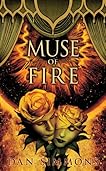
Muse of Fire by Dan Simmons

This was my final read during the Read-A-Thon, the book I spend the last hour and a half reading. It is novella-sized, just a little over 100 pages, and I wanted something that I could finish during that last stretch. Unfortunately, I forgot that you have to pay attention when you read a book by Dan Simmons, so I found myself re-reading passages that my sleepy brain did not understand the first time through. I did finish it by the end.
Reading Dan Simmons is always interesting - he loves to just drop you into the world that he has created for the story, and you have to read carefully so as to not miss any clues about what is going on. This book is no different. It is narrated by Wilbr, a 20 SEY old man (what is SEY, you ask? not sure, Simmons hardly ever outright explains things like that - if I had been less sleepy, I'm sure I would have figured it out) who is a member of a traveling Shakespeare troupe. They travel the galaxy on their ship, the Muse of Fire, performing for the human slaves on the various worlds that the human race can now be found on. All human are slaves, for the most part. There is no real culture or technology any more. There is religion, and obviously there is Shakespeare, but otherwise the human race exists only as drones working for the higher alien beings. The book begins when the Archons, the race of aliens that supervise the humans, request to see a performance of the troupe. This has never happened before. The group realizes they are being tested somehow, and in some way, the fate of the entire human race now rests in their hands.
One thing that you have to love about Simmons' books is that he loves literature, and so do his characters. Obviously Shakespeare is central to this story, and it is interesting how he juxtaposes the Bard's work with a future culture-less humanity. It makes you wonder how Shakespeare survived for so long in this future as it is. This book is really about the redemptive power of art, or literature, and it was a beautiful, comforting read.

Thursday, April 23, 2009

Coraline by Neil Gaiman

For those who don't know the plot, Coraline is a little girl who moves into an old house with her mother and father. Her parents certainly cannot be accused of paying too much attention to her, and prefer not to be bothered by her for the most part, as they both work from home. So Coraline must amuse herself. While exploring their new home, she finds a locked door that, when opened, reveals nothing but a brick wall on the other side. But for some reason Coraline is drawn to the door. And after opening it a couple of times on different days, one day she opens it to find a hallway leading somewhere, no more brick wall. Of course she follows it.
On the other side she finds her Other Mother and her Other Father, and all of the characters that live in her building are there, they are simply creepier versions of themselves. And they all have buttons for eyes. Coraline soon comes to realize that the one in charge in this creepy place is the Other Mother - it is she who wants to keep Coraline there forever, and will stop at nothing to fulfill this desire.
I loved this book, which was sort of expected. I saw the movie first, which is not something I usually do, but it did not really spoil anything for me. The two are different from each other, with additional characters being added in the movie, but for the most part the stories are the same. This is a fast-paced, creepy story that would be enjoyed by any older kids, as well as teens and adults. And one thing I have to say about movies made from books by Neil Gaiman - they seem to turn out okay. I have been so horrified by what Hollywood does to some wonderful books (exhibit A - The Golden Compass), but both of the book-to-movie adaptations I've seen have been slightly different from the book, but still very good. I really enjoyed both the book and the movie of Stardust, and the same goes for Coraline.
Coraline was reviewed by Dewey back in October of 2007. I think my favorite thing that she has to say about it is that rather having Dakota Fanning in a movie version, she wanted to see a 1988 Winona Rider. The Unshelved Book Club also did a comic strip about Coraline. It's pretty funny, so I thought I would share it with you. If you would like to see the challenges for Dewey's books and the Unshelved Book Club, you can find them here and here (respectively).

Wednesday, April 22, 2009

Spin by Robert Charles Wilson

Spin follows the lives of three friends, beginning when they are twelve and thirteen. The story is told by Tyler Dupree, and we follow what is happening to him in his "present" time, at the same time as he is telling us about his past. It makes for some very suspenseful reading.
Tyler's story of his past begins with the night the stars disappear. He is spending the evening with his two closest friends, the twins Jason and Diane. That October night begins what will later be referred to as the Spin. As the human race deals with this strange phenomenon, they make unsettling discoveries about what it means for Earth and its relationship with the rest of the universe. Because they discover that the Spin membrane (as it comes to be called) not only surrounds the Earth and blocks its view of the rest of the universe - it also effectively stops time for Earth. Each year on Earth is now equivalent to something like 100 million years in the universe, meaning that the sun is aging much faster relative to Earth, and within a few decades will destroy the Earth.
The glimpses we are given of the present, while hearing the history of the Spin from Tyler, make certain things in the story clear. But it leaves you wondering so much, so that you can't wait to get to that part of Tyler's history and find out what happened. I really was drawn into this book, and enjoyed it tremendously. Robert Charles Wilson will definitely be an author that I look for from now on.
I read this book for my 999 Challenge, because it won a Hugo Award in 2006. My full list of books to read for the challenge is here. Robert Charles Wilson is also a new author for me, so this is another one for the New Author Challenge. Oh, and this is my second "S" for the Read Your Name Challenge (just J and I to go!).

Tuesday, April 21, 2009

The Worst Hard Time by Timothy Egan

The Worst Hard Time: The Story of Those Who Survived the Great American Dust Bowl was everything that I'd hoped for in a non-fiction title. Egan begins his tale by introducing us to many of the characters who will populate his history: real people who lived through the Dust Bowl in the No-Man's Land of the Oklahoma and Texas panhandles and the southeastern corner of Colorado, with some stories of northeast New Mexico and southern Kansas thrown in as well. The Dust Bowl is not a respecter of state lines.
The chronological story begins with the wheat boom that brought settlers to the plains. Egan tells us how they were lied to to get them to stay, and how they convinced themselves that agriculture could work on the land. It is tremendously sad, reading how the buffalo were destroyed and the Native Americans removed from their lands. Egan then goes on to describe the first changes, the beginning of the drought, when people did not yet know that disaster was coming. This is a profoundly moving book, as we get to know each of the families - you see how they suffer, how they stick through the worst times, or leave in order to save their lives. It's hard to imagine living through something so terrible, but I suppose that we always want to believe that it can't get any worse. This book is highly recommended for anyone who enjoys reading about history.
I picked this book up because it won the National Book Award for Non-Fiction in 2006. I am reading award winners for my 999 Challenge. You can see my whole list here. Timothy Egan is a new author for me, so here's another one for the New Author Challenge.